How Can a China Prep Center Help Cross-Border Sellers Complete Large-Scale Product Kitting, Packaging, and Carton Packing?
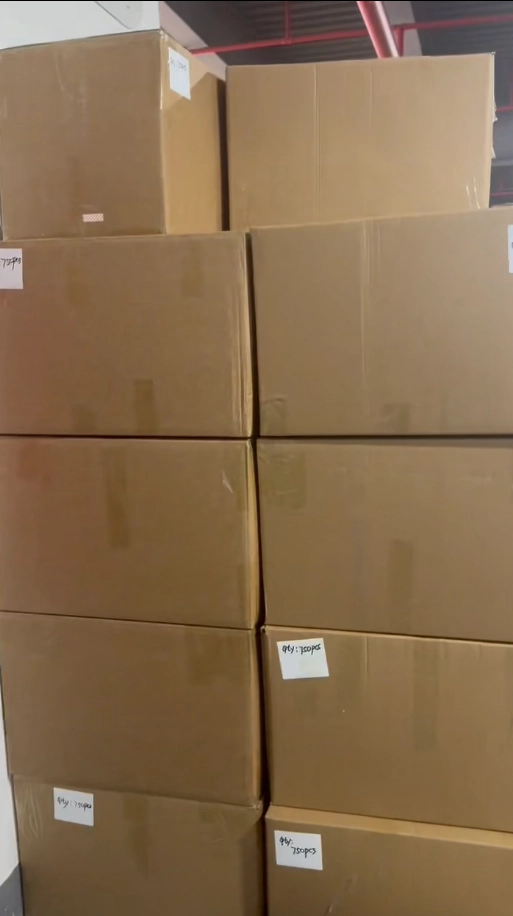
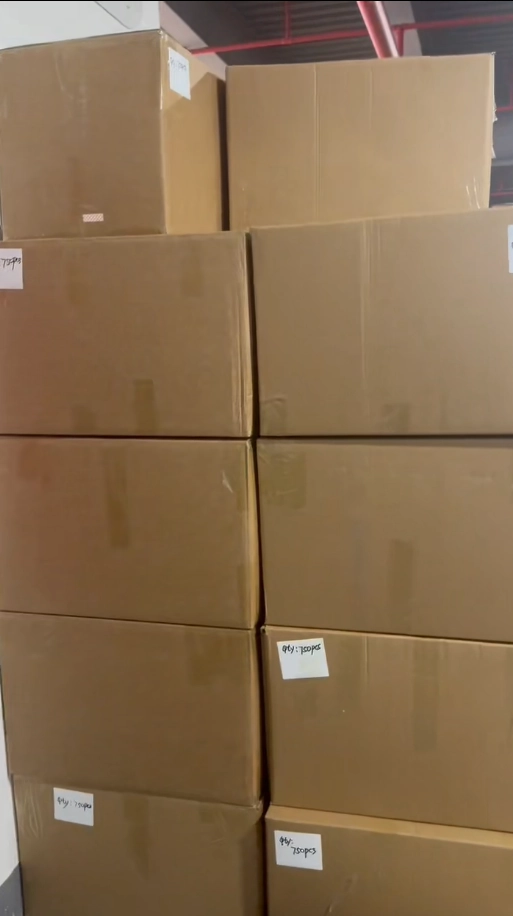
Final cartons from the completed 30,000-set product kitting project, uniformly labeled with QTY:750PCS and neatly stacked
For many cross-border e-commerce sellers, sourcing products from China is only the first step.
When products come from multiple suppliers, or when one sales unit consists of multiple components, additional warehouse processing is often required before the products can be sent to Amazon FBA, overseas warehouses, or other sales channels, such as:
Product Kitting
Product Bundling
Repackaging
Labeling
Quality Inspection
These tasks may appear simple, but when the order volume reaches tens of thousands of units, the real challenge is not assembly itself, but maintaining efficiency, accuracy, and packaging consistency throughout the entire process.
Recently, our Prep Center in Yiwu completed a large-scale Product Kitting project.
The final project data was as follows:
30,000 product kits
6 different components per set
Completed within 10 days
4 workers involved in daily operations
40 final shipping cartons
750 sets per carton
In this article, we will share the actual workflow of this project and explain how process optimization helped us complete the entire operation.
Project Overview: A 30,000-Set Product Kitting Project
Workers performing product kitting according to a standardized workflow, with each set containing six individual components
The products in this project consisted of multiple different components.
The client required these separate components to be combined into a complete sales unit, individually packaged, and packed into cartons for international shipment.
For smaller orders, assembling and packaging at the same time may not create obvious issues.
However, when the quantity reaches 30,000 sets, any inefficient workflow becomes significantly magnified.
If workers constantly need to:
Locate different components
Adjust product positions
Retrieve packaging materials
Complete individual packaging
overall efficiency will decrease substantially.
Therefore, before large-scale production began, the warehouse team first tested and optimized the entire process.
Challenges Faced During the Project
Although Product Kitting itself is not particularly complex, large-volume projects often involve several challenges.
Managing Multiple Components
Each set contained 6 different components.
If any component was missing, the entire set would become incomplete.
Large-Scale Operations
30,000 sets required more than 180,000 component placement actions.
Without a well-designed workflow, efficiency could drop quickly.
Packaging Consistency
All products needed to maintain the same packaging standard.
Operational differences between workers had to be minimized.
Quantity Accuracy
For large-scale projects, quantity errors often create more problems than packaging speed.
Therefore, the focus of the project was not simply assembling products, but building a stable and repeatable standardized process.
How Was the Product Kitting Process Optimized?
After preliminary testing, the team adjusted the workflow.
The original process was:
Complete one set → Package immediately → Start the next set
The optimized process became:
Arrange components → Complete batch kitting → Package in batches → Verify quantities → Pack into cartons
This approach reduced unnecessary movement and improved overall efficiency.
Step 1: Preparing All Components
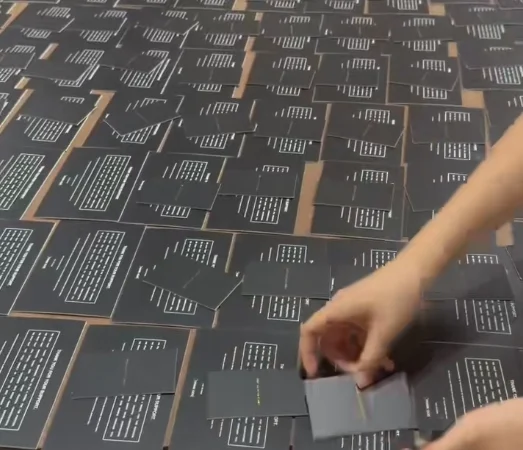
Workers placing the first layer of components and establishing a standardized assembly-line workflow
Before production began, all components were arranged on the worktable in a fixed sequence.
The six components required for each product set were organized in a standardized layout.
This provided several advantages:
Reduced time spent searching for components
Lower error rates
Improved overall kitting speed
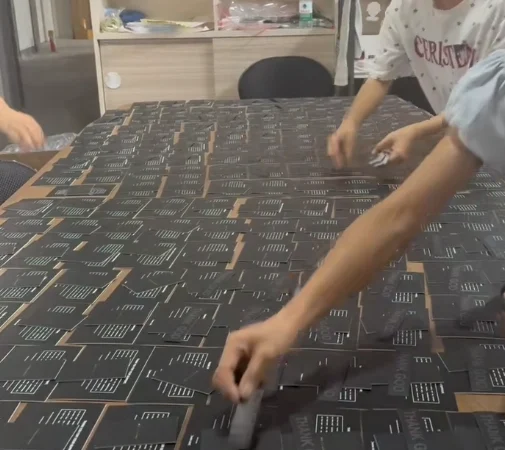
During actual operations, multiple workers simultaneously handled different component layers, creating an assembly-line workflow.
Workers placing the second layer of components
Third-layer assembly process with multiple workers collaborating simultaneously
Step 2: Batch Product Kitting
After the workflow was confirmed, workers began large-scale kitting operations.
Four workers participated in the project each day.
Each person was assigned a specific task.
For example:
Placing the base component
Adding the second-layer component
Adding the third-layer component
Organizing and inspecting products
Through standardized task allocation, consistent operating standards could be maintained among all workers.
This also made supervision and quality control easier.
Step 3: Individual Packaging
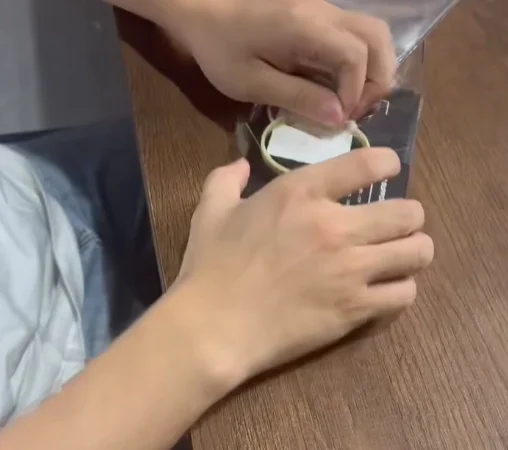
A worker placing completed product kits into OPP bags
After assembly, the products moved to the packaging stage.
Workers placed each completed set into a transparent OPP bag.
Individual packaging provided several benefits:
Keeping products clean
Preventing items from separating during transportation
Making quantity verification easier
Improving final presentation
Another packaging station simultaneously performing OPP bag packaging
After packaging, products were temporarily placed into turnover cartons while awaiting final organization.
Quantity Verification and Final Carton Packing
After OPP packaging was completed, the project entered the quantity verification stage.
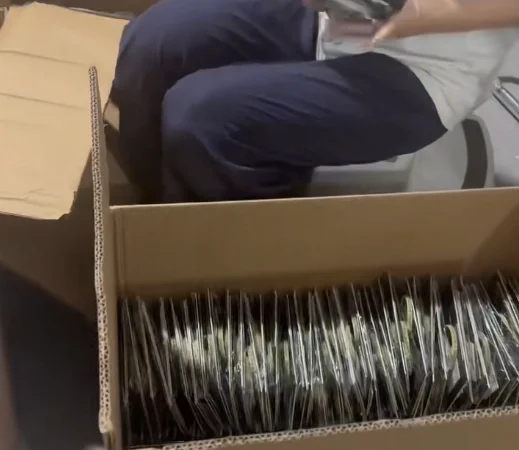
Worker verifying quantities and loading products into standardized shipping cartons
Workers removed products from turnover cartons and counted them again.
After confirmation, products were packed into standard shipping cartons.
Another worker performing counting and carton packing from a different angle
After testing product dimensions, packaging thickness, and carton capacity, the final carton configuration was determined:
750 product sets per carton.
This figure was not predetermined.
Instead, it was established during actual operations based on packing efficiency and space utilization.
Carton Packing Optimization
Products placed into cartons before final arrangement
At the initial packing stage, products had already been packaged but had not yet been organized.
To improve space utilization and transportation stability, workers further adjusted the carton layout.
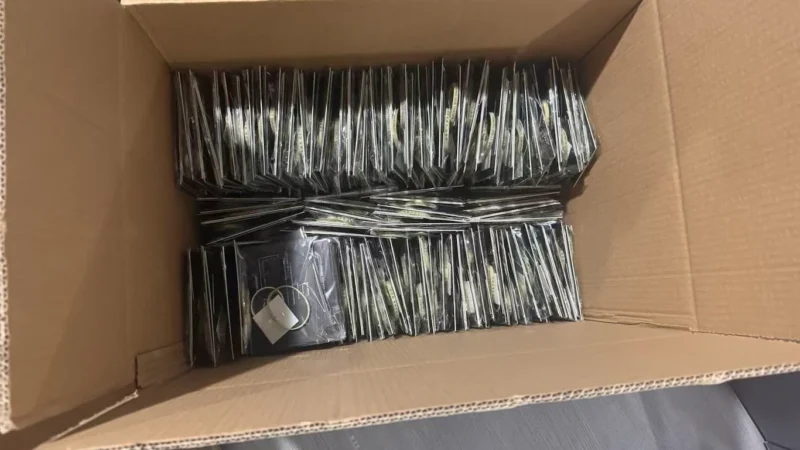
Final carton arrangement with products vertically aligned and compressed for stability
After organization and compression, products could be positioned more securely inside the cartons.
This also improved carton space utilization and reduced movement during transportation.
The final project result:
30,000 product sets
40 standard shipping cartons
750 sets per carton
After sealing, all cartons were stacked together and labeled:
QTY: 750 PCS
Quality Control During the Product Kitting Project
For large-scale Product Kitting projects, the biggest risks usually come from quantity errors and operational inconsistencies.
To ensure successful completion, quality control was implemented at multiple stages.
Process Testing Before Production
Trial runs were completed before mass production began.
The optimal workflow was confirmed before full-scale operations started.
Standardized Operating Procedures
All workers followed the same operating procedures.
This minimized differences caused by individual working styles.
Random Inspections
Other warehouse staff conducted spot checks throughout the production process.
Potential issues could be identified and corrected early.
Quantity Verification Before Carton Packing
All products were counted again before final carton packing.
This ensured accurate carton quantities.
Thanks to proper workflow design, no rework was required during the entire project.
When Do Sellers Need Product Kitting Services in China?
Many cross-border sellers use Product Kitting Services in China when:
Products come from multiple suppliers
One sales unit contains multiple accessories
Amazon FBA requires bundled packaging
Products require relabeling
Packaging standards need to be unified
Subscription box projects require assembly
Promotional gift sets need bundling
Compared with shipping products overseas for later processing, completing kitting operations in China often reduces transportation and operational costs.
Why Are More Sellers Choosing a China Prep Center?
For overseas sellers, outsourcing kitting operations to a China Prep Center offers several advantages.
Close to the Supply Chain
Suppliers are concentrated, making receiving and inventory management easier.
Reduced Coordination Costs
Sellers do not need to manage product combination issues among multiple suppliers themselves.
Improved Packaging Consistency
Standardized procedures help maintain uniform quality across large-volume orders.
Connection to Logistics Operations
After Product Kitting is completed, products can move directly into:
Amazon FBA shipment preparation
Overseas warehouse replenishment
International freight arrangements
without requiring additional unpacking and handling.
Project Results Summary
Final shipping cartons after project completion, uniformly labeled and neatly stacked
The final results of this project were:
30,000 completed product kits
6 components per set
Entire project completed in 10 days
4 workers involved
40 final shipping cartons
750 sets per carton
No rework was required throughout the project.
Through process testing, standardized operations, and quality control, the warehouse team successfully completed this large-scale Product Kitting project.
For sellers seeking Product Kitting Services, Amazon Prep Services, or support from a China Prep Center, an experienced warehouse team does more than simply assemble products—it helps ensure efficiency, accuracy, and consistency.
When order volumes grow from hundreds of units to tens of thousands, a stable workflow often becomes more important than simply adding more workers.
Need Product Kitting or Amazon Prep Services in China?
PrepInChina provides:
Product Kitting
Product Bundling
Amazon FBA Prep
Labeling
Repackaging
Quality Inspection
Warehousing
Whether you need hundreds or tens of thousands of product kits, we can help with kitting, packaging, inspection, and shipment preparation.